
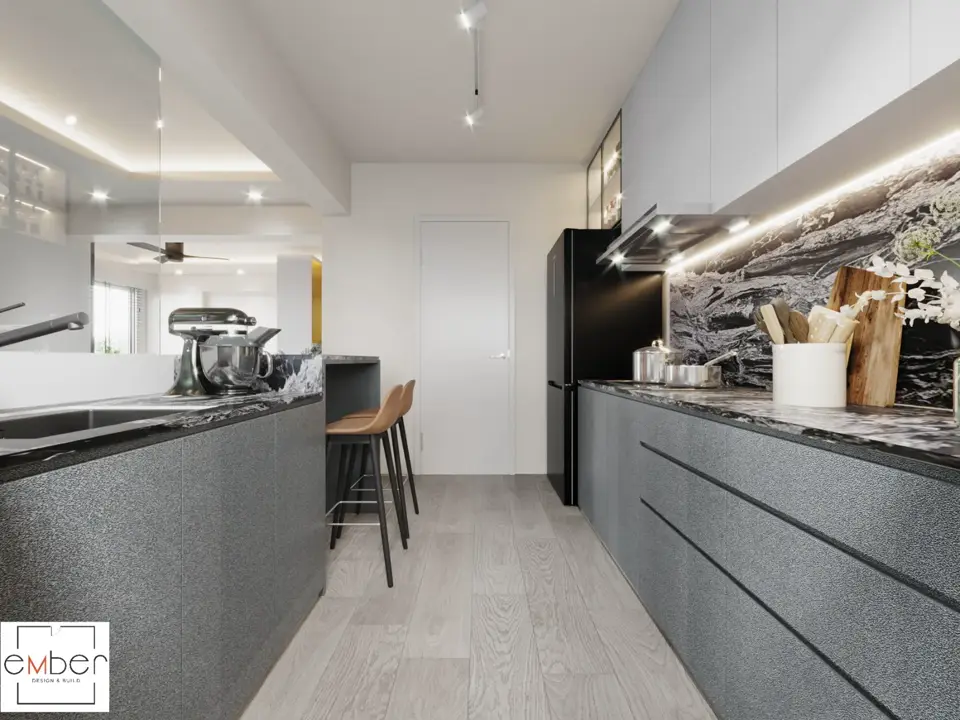
Three renovation quotations can describe three different projects while appearing to price the same home. One may include full hacking and disposal; another may assume overlay. One may specify cabinet lengths and hardware; another may show a lump sum. Comparing only the totals rewards the quotation that leaves the most undefined.
The practical solution is to create one comparison sheet based on your floor plan and intended scope. Read each quotation trade by trade, record every difference, and ask each contractor to clarify or revise before you decide.
Ember’s view: Price becomes meaningful only after scope is aligned. A S$5,000 difference can disappear—or grow—once omitted electrical points, plumbing connections, disposal, material upgrades and site protection are added.
Step 1: prepare one scope before requesting prices
Give every contractor the same information: floor plan, property condition, rooms to renovate, items to retain, layout changes, preferred material level and target completion period. If contractors receive different instructions, their totals cannot be compared fairly.
Separate your requirements into three groups:
- Required works: the items the project cannot proceed without, such as hacking, waterproofing, wiring, plumbing or essential carpentry.
- Optional works: feature walls, additional storage, premium hardware or decorative finishes that can be removed if the budget is tight.
- Owner-supplied items: appliances, sanitary fittings, lights, furniture, curtains and accessories that may sit outside the renovation contract.
This also prevents you from mistaking the renovation contract for the total cost of moving in. For budget context, see Ember’s 2026 4-room HDB renovation cost guide.
Step 2: compare each trade line by line
| Quotation area | What must be stated | Common comparison trap |
|---|---|---|
| Demolition | Exact items, hacking areas, haulage and disposal | “Removal works” without defining what is removed |
| Masonry and tiling | Area, tile allowance, screed, waterproofing, skirting and trims | Different tile price allowances or missing substrate repair |
| Carpentry | Length, height, depth, internal layout, laminate and hardware | Lump-sum cabinets with no measurable quantity |
| Electrical | Number and type of points, circuits, lights and testing | A small provisional sum that grows after site marking |
| Plumbing | Pipework, points, fittings, installation and testing | Sanitary installation priced separately or omitted |
| Painting and ceilings | Areas, paint system, coats, ceiling extent and access panels | Assuming doors, pipes or touch-ups are included |
| Preliminaries | Protection, permits, delivery, cleaning and coordination | Low trade prices with project costs added later |
Step 3: insist on measurable quantities
Whenever possible, the quotation should state how the price was calculated. Carpentry can be shown by length and configuration; worktops by length and thickness; tiling by area and tile allowance; electrical work by point type and count.
Quantities protect both sides. The homeowner can see what is included, while the contractor has a clear basis for pricing additions or deductions. Words such as “whole house”, “as required” or “standard package” need supporting details.
Also ask how final site measurements will be treated. If the quotation uses estimated dimensions, the document should explain whether the contract sum will be adjusted after measurement and at what unit rate.
Step 4: compare specifications, not item names
Two quotations can both state “kitchen cabinet”, “quartz worktop” or “homogeneous tiles” while allowing very different products. Record the brand, range, model, thickness, finish, hardware and price allowance where relevant.
For an allowance item, clarify whether the amount covers only supply or also delivery, cutting, wastage and installation. Confirm what happens if you select above or below the allowance. A transparent quotation should let you calculate the likely difference before you commit.
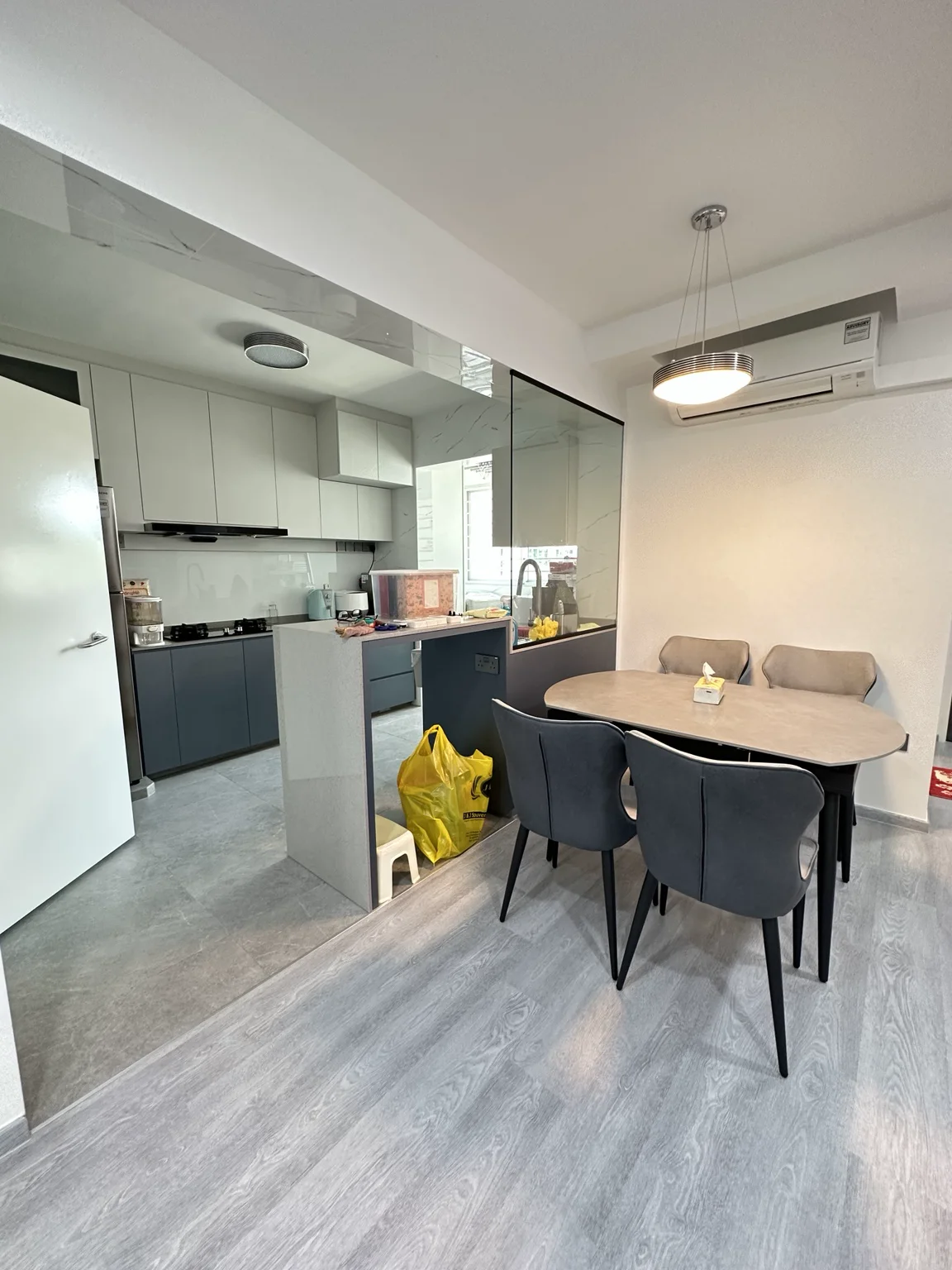
This is one completed project with its own scope and site condition—not a package price. A useful quotation must describe the specific work behind the total.
See site, 3D and completed photosStep 5: turn exclusions into a separate cost list
An exclusion is not automatically a problem. The danger is discovering it only after work starts. Create a separate list for:
- HDB or management-corporation submissions and deposits
- Electrical rewiring, additional points and utility applications
- Air-conditioning, gas and specialist works
- Appliances, lights, sanitary fittings and accessories
- Delivery, hoisting, disposal and protection
- Repairs to concealed or defective existing conditions
- Final cleaning, chemical washing and pest treatment
Add realistic allowances for excluded items to each contractor’s total. This “adjusted project cost” is far more useful than the headline quotation amount.
Step 6: examine the payment schedule and contract
Payments should follow clear project milestones rather than vague calendar dates. Before signing, understand the deposit, each progress claim, what evidence shows that a milestone is reached, and the balance retained for completion or rectification.
CASE advises consumers to insist on a written contract and negotiate progressive payments tied to project milestones. Under the CaseTrust renovation accreditation scheme, accredited businesses use a standard renovation contract; CASE states that payments are collected in phases, initial deposits are capped at a maximum of 20% of the total cost, and pricing and variations must be transparent. These particular protections apply to CaseTrust-accredited businesses—not automatically to every renovation contractor.
Also check the legal company name and UEN on the quotation, the person authorised to approve changes, workmanship or service-warranty terms, dispute process, suspension and termination clauses, insurance responsibilities and ownership of drawings.
Step 7: agree on variation-order control
A variation order records a change to the agreed contract scope. It should state what is added, omitted or altered, the price difference, and any effect on the completion date. Except for urgent safety work, request written agreement before additional work proceeds.
Ask how deductions are calculated when work is removed. A fair process should handle additions and omissions consistently. Keep quotations, drawings, selections, approvals, payment records and variation orders in one project file so decisions do not depend on verbal memory.
Step 8: verify the contractor separately from the price
For an HDB flat, HDB states that owners must engage a contractor listed in its Directory of Renovation Contractors and remain responsible for ensuring the renovation follows HDB guidelines. Some works require permits, and specialist work can require appropriately licensed or trained persons. Verify the company using HDB’s contractor search—not only a logo displayed in marketing material.
For any renovation, check the company identity, operating history, current projects, communication process and who will supervise your site. If a business claims CaseTrust accreditation, verify it against the official accredited-business listing. CASE also maintains a Company Alert List, which is one useful check rather than a complete assessment of every contractor.
A simple decision scorecard
After clarifications, score each contractor on five areas instead of price alone:
- Scope completeness: Are quantities, materials and responsibilities clear?
- Adjusted project cost: What is the realistic total after exclusions and owner-supplied items?
- Contract protection: Are payments, variations, warranty and rectification procedures written?
- Execution ability: Is the proposed programme realistic, and who coordinates the site?
- Communication: Does the contractor answer technical questions clearly and document decisions?
The best-value quotation is usually the one that gives you the clearest control over cost, quality and change—not merely the lowest number on the first page.
Frequently asked questions
Should I choose the cheapest renovation quotation?
Only after all contractors have priced the same scope, quantities, specifications and responsibilities. A lower total may reflect missing works or lower material allowances rather than better value.
How many renovation quotations should I obtain?
Two or three detailed quotations are usually enough for a meaningful comparison if every contractor receives the same brief. Collecting many vague quotations creates more noise without improving the decision.
Is a renovation quotation the same as a contract?
A signed quotation may form part of the agreement, but it may not cover payment milestones, variations, delay, defects, warranties, termination and dispute handling. Read the complete contract documents together before signing.
Can a contractor charge for additional work without approval?
Set the rule in the contract: changed scope, price and time effect should be agreed in writing before work proceeds, except where immediate action is genuinely required for safety or to prevent damage.
Comparing quotations?
Compare the scope before the total.
Send your floor plan, intended scope and current quotation. Ember can identify undefined quantities, material allowances, exclusions and coordination items worth clarifying before you commit.
WhatsApp my quotation↗Official sources checked on 28 September 2026
CASE: CaseTrust Accreditation for Renovation Businesses; CASE: Renovate Your Home with Peace of Mind; HDB: Important Information on Renovations; and HDB: Application for a Renovation Permit. Requirements can change; verify the current rules and accreditation status before signing.