
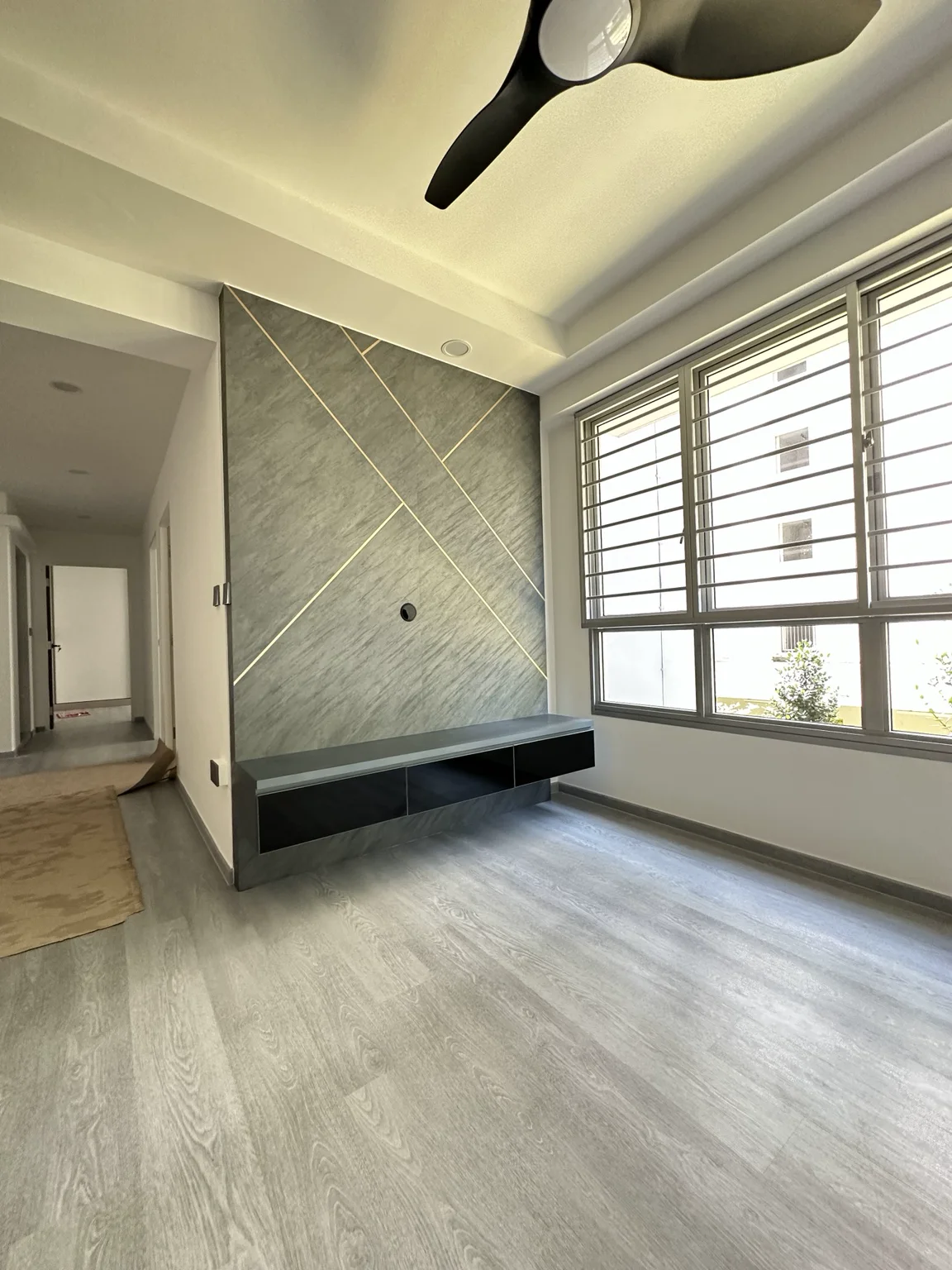
For a 4-room HDB flat in Singapore, the most useful budget is not the lowest package price you can find. It is the amount required for your actual scope, property condition and material choices—with enough room for items the first quotation may not include.
Qanvast’s 2026 data estimates a typical 4-room BTO renovation at S$50,000 to S$60,000 and a typical 4-room resale HDB renovation at S$70,000 to S$81,600. Its figures are projections from 2025 medians across 341 BTO and 449 resale projects. They are a useful market reference, but they are not a promise of what every home should cost.
Ember’s view: Start by defining the works you need. A clear S$55,000 scope can be more useful than a vague S$45,000 quotation that later grows through omissions and variation orders.
BTO vs resale: why the cost is different
A new BTO usually starts with fewer old finishes to remove and fewer unknown site conditions. The budget can therefore go more directly into carpentry, lighting, selected flooring, painting and the details that make the home work for your household.
A resale flat often needs work before the new design can begin. Existing cabinets and finishes may need to be dismantled; tiles may be hacked; wiring and plumbing may need review; walls may require repair; and older site conditions can become visible only after demolition. That additional labour explains much of the difference.
| Project type | Indicative range | Usually means |
|---|---|---|
| Targeted refresh | S$20,000–S$35,000 | Selected rooms or retained finishes; not a full-home rebuild |
| 4-room BTO | S$50,000–S$60,000 | A typical full-home scope, depending on carpentry and finishes |
| 4-room resale | S$70,000–S$81,600 | More demolition, replacement and site-condition work |
| Extensive transformation | S$90,000+ | Major reconfiguration, extensive carpentry or premium specifications |
The BTO and resale benchmarks above are from Qanvast’s 2026 market report. The targeted and extensive bands are broad planning categories, not quotations. Appliances, loose furniture, curtains and moving costs are commonly budgeted separately.
The seven decisions that change your quotation
- Existing condition. Retaining usable flooring, doors or built-ins can reduce work. Removing defective or unsuitable finishes adds demolition, haulage and reinstatement.
- Kitchen scope. Cabinet length, internal fittings, worktop material, backsplash, electrical points, plumbing and appliance positions can move the kitchen budget substantially.
- Bathroom works. Hacking, waterproofing, tiling, drainage, plumbing changes, shower screens, sanitary fittings and vanity carpentry should be read as one connected scope.
- Custom carpentry. Full-height wardrobes, feature walls, platforms and concealed storage add cost quickly. Prioritise built-ins where they solve a real daily problem.
- Layout changes. Altering walls, doors or service positions affects more than one trade and may require approval. Resolve the plan before pricing.
- Material specification. Two quotations may use the same item name but allow for different tile prices, laminate ranges, hardware, worktops or paint systems.
- Quotation completeness. Protection, disposal, permits, delivery, electrical points, plumbing connections, touch-ups and cleaning can be included, excluded or left provisional.
How to build a safer renovation budget
Divide your available funds into three separate amounts:
- Renovation contract: the agreed construction and design scope.
- Owner-supplied items: appliances, sanitary fittings, lights, furniture, curtains and décor.
- Contingency: ideally 10–15% held outside the contract sum for genuine changes or concealed conditions.
If S$70,000 is your absolute ceiling, do not sign a S$70,000 renovation contract and assume everything else will fit. Work backwards from the total amount you can comfortably spend, reserve the owner-supplied items and buffer, then shape the renovation scope around what remains.
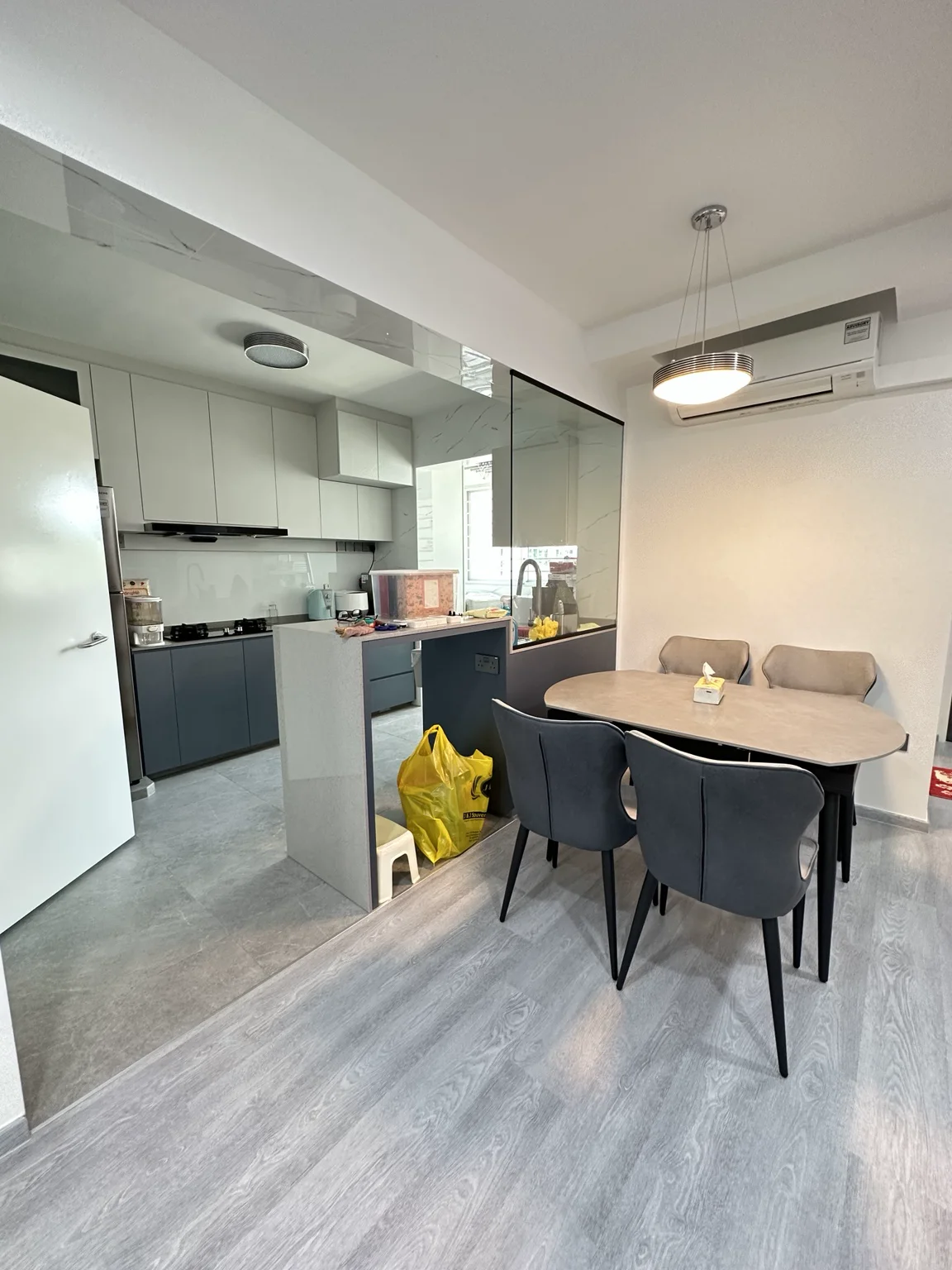
This completed project demonstrates one defined scope and should not be treated as a 2026 package price. Site condition, inclusions and specifications determine every current quotation.
See site, 3D and completed photosHow to compare renovation quotations properly
Do not compare only the total at the bottom. Put each quotation beside the same floor plan and checklist, then review:
- Quantities and dimensions for carpentry, worktops, tiles and ceilings
- Material allowances, brands, finishes and hardware
- Number of electrical points, lights and plumbing connections
- Demolition, debris disposal, protection and haulage
- What is provisional, excluded or charged only after site measurement
- Payment stages, variation-order approval and rectification responsibilities
- Who coordinates the trades and who is accountable for the final result
A low quotation can still be suitable when the scope is deliberately limited. The risk is a quotation that looks complete but leaves important work undefined.
Remember the HDB requirements
Some renovation works require HDB approval and specific trades must meet the applicable requirements. HDB publishes separate guidance for building, window, electrical, air-conditioning, plumbing and gas works. Always confirm the current rules for the exact work proposed.
Ember Design & Build is an HDB Registered Renovation Contractor, HB-08-3265C. We identify the relevant requirements for the agreed scope and coordinate applicable renovation submissions before affected work begins.
Frequently asked questions
Can a 4-room HDB renovation be done below S$50,000?
Yes, when the scope is selective—for example, by retaining sound finishes, limiting carpentry or focusing on priority rooms. It is less realistic when a resale flat needs full hacking, two bathrooms, major kitchen work, rewiring and extensive built-ins.
Why do online renovation packages look much cheaper?
Packages often start from a fixed list of quantities and basic allowances. Your final cost may change when site condition, additional lengths, material upgrades, electrical work, plumbing or excluded items are added.
How long does a 4-room HDB renovation take?
Qanvast’s 2026 estimate is about eight to ten weeks for both BTO and resale 4-room flats. A simpler scope can be faster; approvals, custom items, material lead times and site discoveries can extend the programme.
When should I ask for a renovation quotation?
Begin once you have the floor plan, key priorities, comfortable total budget and target move-in date. Starting before key collection gives more time to resolve the layout and scope without rushing costly decisions.
A useful first conversation
Bring the floor plan.
We will help clarify the scope.
Send your property type, floor plan, three renovation priorities, comfortable budget range and target start date. Ember will identify the first decisions worth resolving before detailed costing.
WhatsApp my project brief↗Sources and checks
Market ranges: Qanvast, 2026 HDB renovation costs. Current renovation requirements: Housing & Development Board renovation guidelines. Prices and rules can change; verify them for your project before committing.